
Yves Günther · 14 October 2026
Primary Element Management Strategies for Sustainable Tech Infrastructure Growth
Primary element management in tech infrastructure focuses on the core components that drive data centers, networks, and computing facilities, and researchers have documented how coordinated oversight of power usage, cooling systems, and hardware lifecycle extends operational lifespan while reducing environmental strain. Data from industry reports indicate that facilities implementing structured element tracking achieve measurable reductions in energy consumption, with some sites recording drops of up to 25 percent over five-year periods according to analyses by the U.S. Department of Energy.
Core Components and Their Role in Infrastructure Stability
Primary elements include energy supply chains, thermal regulation mechanisms, and physical asset inventories, and these elements interact continuously in large-scale operations. Organizations that map these interactions through sensor networks and centralized dashboards gain clearer visibility into performance bottlenecks, which allows maintenance teams to address issues before they escalate into outages. Studies from the International Energy Agency show that precise monitoring of these elements correlates with lower failure rates across global data center fleets.
Hardware refresh cycles represent another critical layer, and companies that align replacement schedules with efficiency benchmarks extend the productive life of servers and switches. This approach cuts down on electronic waste volumes, and evidence from Canadian government environmental assessments confirms that extended asset use contributes to reduced raw material extraction demands in the electronics sector.
Energy Optimization Techniques in Practice
Power distribution management starts with load balancing across multiple sources, and facilities that integrate real-time demand forecasting adjust consumption patterns to match available supply. Operators who apply predictive algorithms to shift non-critical workloads during peak grid stress periods report consistent savings on utility costs. European Commission energy efficiency directives have encouraged similar practices across member states, where operators document compliance through annual reporting on primary energy metrics.
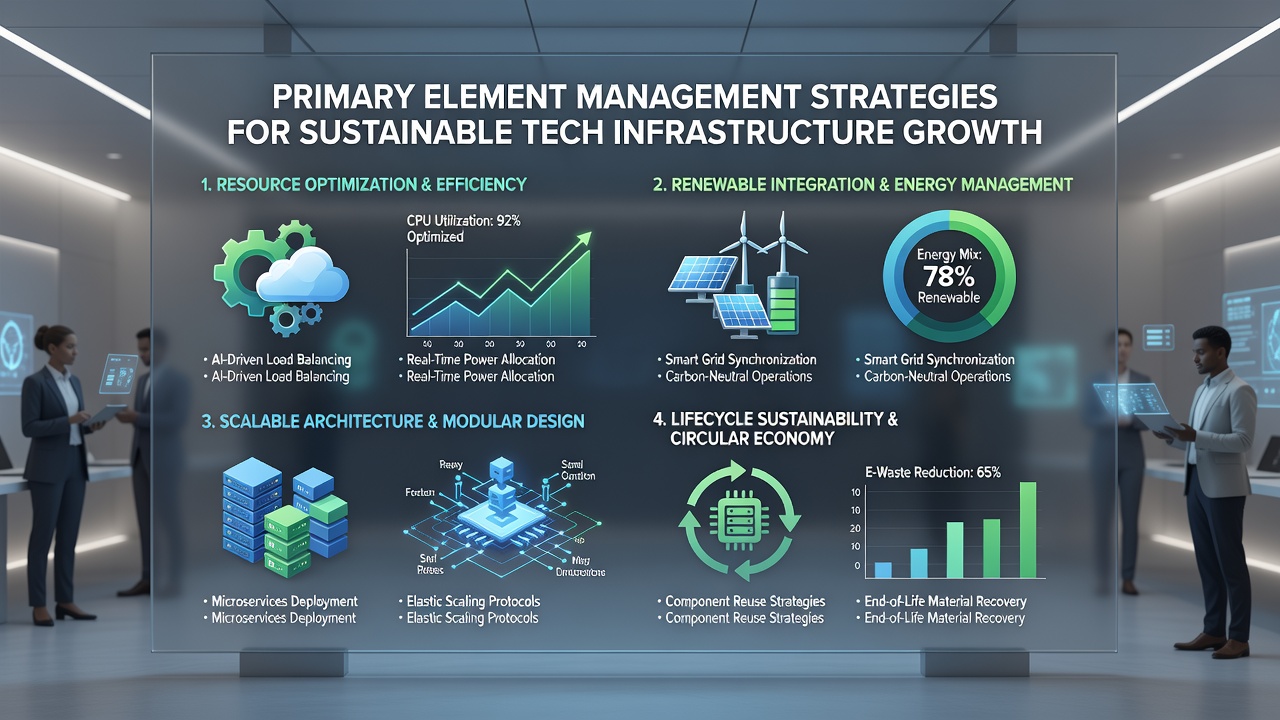
Cooling infrastructure accounts for a significant share of total energy draw, and advanced strategies combine free-air cooling with liquid immersion methods in regions where climate conditions permit. Research compiled by Natural Resources Canada highlights how northern latitude sites leverage ambient temperatures to lower mechanical cooling loads, resulting in documented efficiency gains. Those who combine these methods with variable-speed pumps and fans achieve finer control over temperature gradients throughout server halls.
Renewable Integration and Resource Tracking
Facilities that incorporate on-site solar arrays or procure renewable energy certificates align their consumption profiles with cleaner generation sources, and data from the Australian Renewable Energy Agency illustrates how such pairings stabilize long-term operational expenses. Primary element oversight extends to water usage in evaporative cooling systems, where metering and recycling loops reduce overall withdrawal rates from local supplies. Observers note that integrated tracking platforms help operators meet regional sustainability reporting requirements without disrupting daily workflows.
October 2026 marks the scheduled release of updated international standards on data center energy performance, and preparatory work by global standards bodies indicates these guidelines will emphasize granular element-level accounting for carbon accounting purposes. Companies already piloting advanced metering systems expect smoother transitions once the new frameworks take effect.
Monitoring Frameworks and Data-Driven Adjustments
Centralized management platforms aggregate data from power meters, temperature sensors, and asset tags, and analysts who cross-reference these streams identify patterns that manual reviews often miss. One documented implementation at a mid-sized European research facility revealed that adjusting airflow baffles based on continuous sensor feedback reduced cooling energy by 18 percent within the first year. Such outcomes depend on reliable data pipelines and regular calibration of measurement devices.
Asset lifecycle planning incorporates predictive maintenance schedules derived from usage analytics, and teams that follow these schedules avoid unplanned downtime while extending equipment viability. Government databases maintained by the U.S. Environmental Protection Agency track aggregate improvements across participating facilities, showing gradual but steady progress in overall resource efficiency metrics.
Conclusion
Primary element management strategies continue to evolve as measurement tools improve and regulatory expectations rise, and organizations that maintain consistent oversight of power, cooling, and hardware components position themselves for sustained operational performance. The approaches outlined rely on documented practices and verified data streams rather than untested assumptions, which supports steady infrastructure growth aligned with environmental constraints.