Kai Jung · 16 September 2026
Atomic Core Integration Challenges in Legacy System Migrations
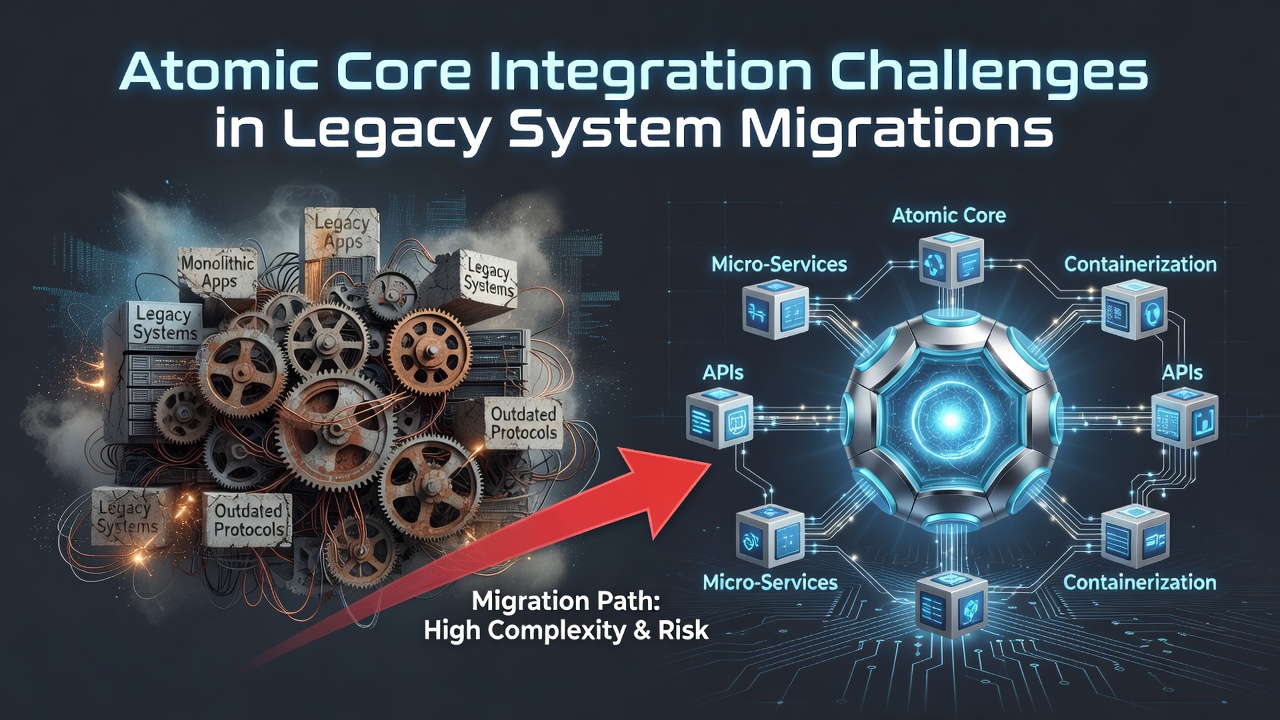
Atomic core integration in legacy system migrations involves embedding modular atomic operations into older monolithic architectures that often rely on outdated protocols and data structures, and researchers have documented how these processes create multiple points of friction across hardware compatibility, data consistency, and runtime synchronization. Organizations undertaking such migrations encounter layered obstacles because legacy environments typically feature tightly coupled components that resist the granular, stateless design principles of atomic core frameworks, while data flows must remain uninterrupted during transition phases to prevent service disruptions.
Core Technical Barriers in Atomic Operations
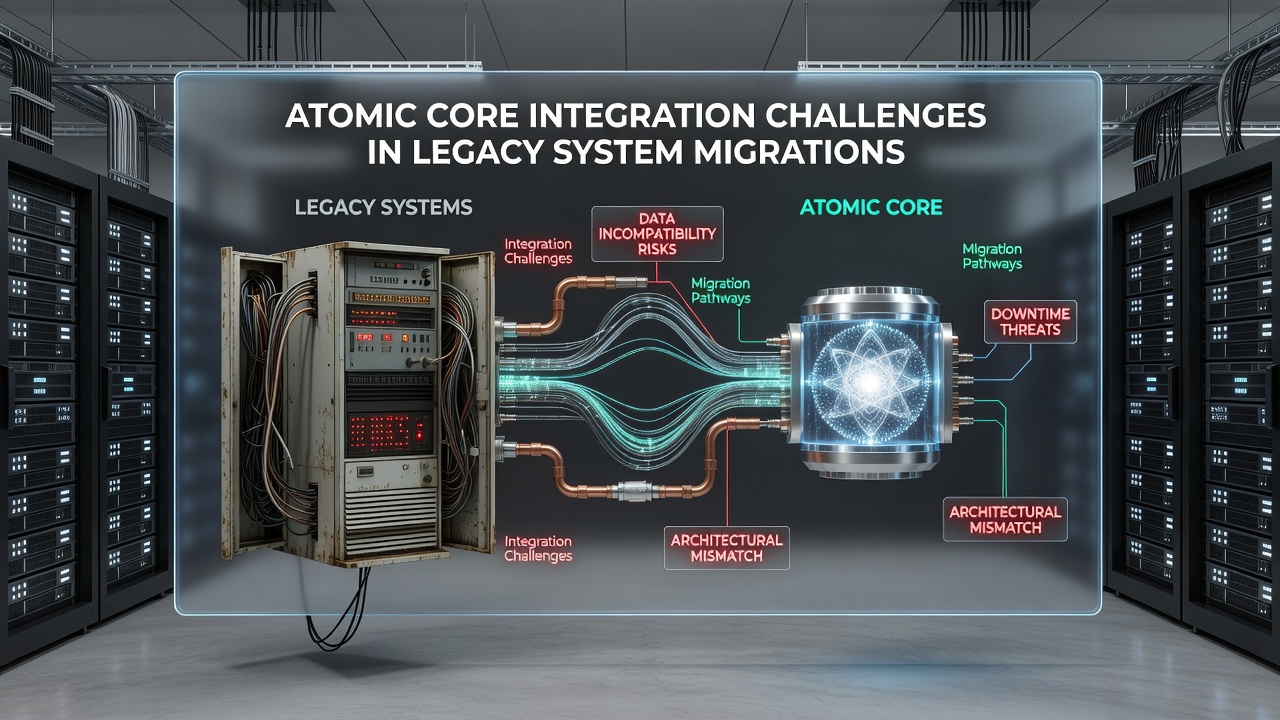
Experts have identified that atomic core systems require precise transaction boundaries which legacy applications frequently lack, leading to partial updates when databases use older locking mechanisms or batch processing routines that cannot isolate individual operations at the required granularity. Studies from academic institutions show that synchronization errors rise significantly when atomic commits attempt to interact with mainframe-based record systems that process transactions in sequential batches rather than real-time atomic units, and this mismatch forces migration teams to build custom middleware layers that add latency and maintenance overhead.
Data Mapping and Consistency Protocols
Legacy databases often store information in proprietary formats that do not align with the normalized schemas demanded by atomic core modules, and observers note that schema translation during migration can introduce inconsistencies if field-level validation rules differ between the old and new environments. Data from government technology assessments indicates that organizations completing migrations in recent years spent substantial portions of project timelines on reconciliation scripts to ensure atomic transactions did not leave orphaned records or duplicate entries when crossing between relational and hierarchical storage models.
One migration effort examined by researchers revealed that timing discrepancies between legacy batch jobs and atomic core event-driven triggers caused repeated rollback events until engineers adjusted polling intervals and implemented event sourcing patterns to bridge the gap. Such adjustments became necessary because legacy systems commonly schedule updates at fixed intervals whereas atomic cores respond to individual triggers, creating windows where state information diverges across the integrated environment.
Interface and API Layer Complications
Integration teams face additional hurdles when legacy systems expose functionality through older RPC or file-based interfaces that atomic core components cannot directly consume without translation layers, and these layers must preserve atomic guarantees while converting between synchronous and asynchronous communication models. Reports compiled by standards bodies highlight how protocol mismatches frequently surface during testing phases, particularly when legacy authentication mechanisms rely on static credentials instead of the token-based or certificate-driven approaches favored in modern atomic architectures.
Performance profiling conducted across multiple projects demonstrates that the added translation steps increase response times by measurable margins, prompting architects to optimize caching strategies and selective data replication to maintain acceptable throughput levels after integration completes.
Security and Compliance Considerations
Security frameworks in legacy environments often operate under different trust models than those required for atomic core deployments, and compliance documentation from regulatory agencies in North America and the European Union shows that encryption standards and audit logging requirements must be retrofitted onto older codebases to meet current data protection mandates. Migration specialists report that atomic transaction logs demand finer-grained access controls than many legacy audit systems provide, necessitating supplemental monitoring tools that feed into centralized security information and event management platforms.
A September 2026 assessment published by the Australian Digital Transformation Agency examined several public sector migrations and found that atomic core integrations required extended validation cycles to confirm that rollback mechanisms functioned correctly under regulatory scrutiny, especially when legacy systems handled sensitive citizen records that could not tolerate even brief inconsistencies during failure scenarios.
Testing and Validation Strategies
Comprehensive testing of atomic core integrations involves constructing parallel environments that replicate both legacy and target behaviors, and industry analyses indicate that end-to-end transaction tracing becomes essential for identifying where atomic properties break down at system boundaries. Teams frequently employ synthetic data sets and replay mechanisms to simulate production loads, allowing detection of edge cases where legacy timeout settings interfere with atomic commit protocols.
Conclusion
Atomic core integration during legacy migrations continues to present technical and procedural challenges that organizations address through middleware development, extended testing protocols, and phased rollout approaches, while ongoing research from institutions across multiple regions supplies updated guidance on minimizing disruption. Data from completed projects illustrates that success depends on thorough mapping of existing interfaces and careful alignment of transaction semantics, and figures from recent evaluations confirm that these efforts enable eventual modernization without complete system replacement in many cases.